In short
- An outage during writes can corrupt RAID metadata, file systems and SSD translation tables.
- A surge destroys electronics, sometimes the drive's protection circuit, sometimes the whole board.
- A correctly configured UPS that shuts the NAS down cleanly is the best protection.
What a power outage does to storage
- NAS and RAID: if the power goes while data and parity are being written, the disks disagree with each other. After restart, the NAS may run a long resync, mark the volume degraded or refuse to mount it. See Synology volume crashed: what DSM is telling you and what to do and QNAP storage pool inactive: causes, safe checks and recovery.
- File systems: journaling limits the damage, but write caches in drives and controllers can still lose data that the system believed was saved.
- SSDs: the translation table that maps your data may be half updated. Some consumer SSDs come back with the wrong capacity or not at all, as explained in SSD not detected: why it happens and how the data is recovered.
What a surge does
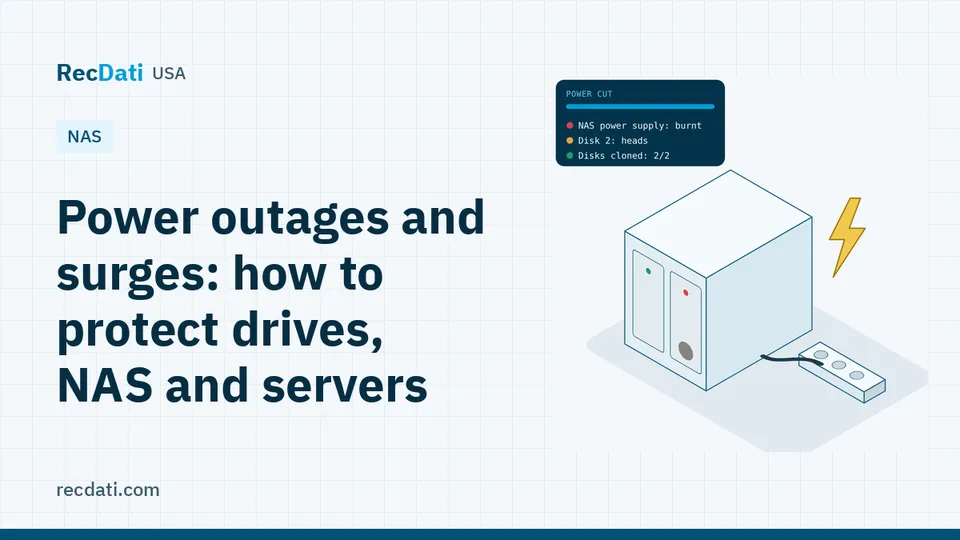
A spike on the mains or on a network cable reaches the power supply, then the drive's board. Many drives have a protection diode (TVS) that sacrifices itself and short-circuits: the drive then appears dead, but the data is intact. Stronger surges damage the motor controller chip or the preamplifier inside the drive, which needs lab work.
The right protection
A UPS, set up properly
An uninterruptible power supply only protects the data if the NAS or server knows when to shut down. Connect the UPS by USB or over the network, enable the UPS function in DSM, QTS or your operating system, and set the shutdown to start after a few minutes on battery. Test it once by switching off the mains. A line-interactive or online UPS also smooths out voltage variations.
Surge protection for everything else
Use UL-listed surge protectors (look for the UL 1449 rating) for computers and external drives, and remember the network: a surge can come through an Ethernet or coaxial cable from the router. Lightning is the most common cause in summer, so unplug sensitive equipment before a storm if you can. The Consumer Product Safety Commission has practical safety advice on power strips and surge protectors.
Heat
A NAS in a closet next to a water heater or in an attic or garage in summer ages its disks quickly. Keep it ventilated and check the disk temperatures in its interface.
During and after an outage
- Report the outage to your electric utility and follow its outage map; Ready.gov explains how to prepare and what to unplug.
- Wait for the power to be stable before switching on, then start the NAS first and check its logs before the computers reconnect.
- If a drive or NAS does not come back, do not try repeated restarts or a repair. Each attempt can make a corrupted volume harder to recover.
- If equipment was damaged, check your homeowner's, renter's or business insurance: many policies cover surge damage, and some utilities accept claims when the outage was caused by their equipment.
Our lab handles both cases: corrupted volumes on NAS data recovery, and drives with damaged electronics on hard drive data recovery.
Frequently asked questions
Is a UPS enough to protect my NAS?
Only if it is connected to the NAS and the automatic shutdown is configured and tested. A UPS that simply runs until its battery is empty ends with the same abrupt cut, just later.
My external drive stopped working after a power outage. Can the data be recovered?
Very often. A surge usually damages the board or its protection component, not the platters. A lab repairs the electronics, keeping the drive's unique calibration data, and copies the data. Do not try a replacement board yourself.
Official sources and useful links
- Ready.gov: power outages: Official advice on preparing for and dealing with power outages.
- Consumer Product Safety Commission: Safety advice on surge protectors, power strips and electrical products.
- FTC consumer advice: Free advice from the Federal Trade Commission on consumer rights and disputes.
Is your data important?
Do not try anything that could make the fault worse. The diagnosis is free and you get a fixed quote before any work starts.