In short
- Do not switch on, browse or 'quickly check' the device: every action changes the evidence.
- A forensic acquisition makes a verified, hashed copy and records the chain of custody.
- The report explains the method and findings so that a lawyer, an arbitrator or a court can rely on it.
First steps
- Preserve the device as it is. If it is off, leave it off. If it is on and holds important live data (an open session, a cloud account), ask for advice before switching it off.
- Do not look through it yourself. Opening files, browsing or plugging in a USB flash drive changes dates and can overwrite deleted data, and it gives the other side grounds to challenge the evidence.
- Note who has had access, when and why. This is the start of the chain of custody.
- Take legal advice early. A lawyer can advise on what you are entitled to examine, on litigation hold obligations and on how the evidence will be used. The American Bar Association explains how to find legal help in your state.
- For a crime, report it to the police, or to the FBI's Internet Crime Complaint Center (IC3) for fraud and cybercrime, before any private examination.
The forensic acquisition
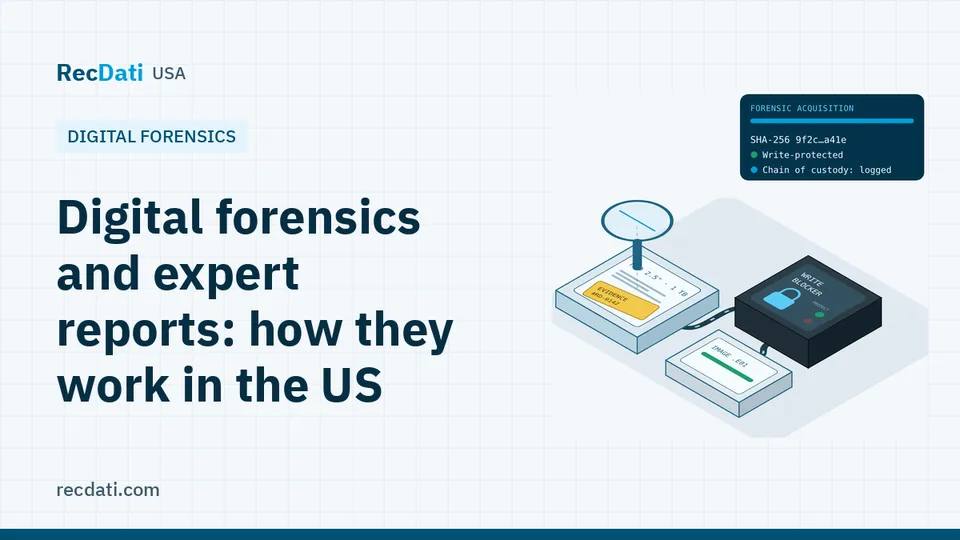
The device is connected through a hardware write blocker, so nothing can be written to it, and a complete image is made. A cryptographic hash (SHA-256) of the original and of the image proves that the copy is identical. Phones are acquired with dedicated tools, and cloud accounts with the owner's consent or a legal basis. The process follows established principles of digital evidence handling, such as NIST's Guide to Integrating Forensic Techniques into Incident Response (SP 800-86).
What the analysis can show
- Deleted files, emails and messages, and when they were deleted.
- USB devices connected, files copied or uploaded to cloud services.
- Activity timelines: logins, documents opened, websites visited.
- Signs of tampering, wiping software or changes to the system clock.
- The origin and history of a document (metadata, versions, authors).
The report
The report describes the devices received, the acquisition and its hashes, the tools and methods used, the findings and their limits, in language that a non-specialist can follow. In federal courts, expert testimony must meet Rule 702 of the Federal Rules of Evidence: it must rest on sufficient facts, reliable methods and a reliable application of those methods to the case. Most states apply similar standards.
Employers and personal data
Examining an employee's device or account involves their personal data. Organizations should have a clear written policy that employees have acknowledged, a legitimate reason and a proportionate approach. Some states, such as New York and Connecticut, require employers to give notice of electronic monitoring, and California gives employees privacy rights under the CCPA.
Our forensic service is described on digital forensics. For incidents involving ransomware, see Ransomware attack: what to do now, who to tell in the US and how to recover.
Frequently asked questions
Can a company examine an employee's computer?
A company device can usually be examined, but the employee's personal data is still protected. A clear policy, a legitimate reason and a proportionate approach are needed, state laws may add notice requirements, and legal advice is wise before acting.
How long does a forensic acquisition take?
A computer or a phone is usually acquired within a day, longer for large drives or several devices. The analysis and the report then take from a few days to a few weeks, depending on the questions asked.
Official sources and useful links
- FBI Internet Crime Complaint Center (IC3): The FBI's portal for reporting cybercrime, including ransomware and online fraud.
- American Bar Association: find legal help: To find a lawyer in your state for a dispute, an investigation or a complaint.
- Federal Trade Commission: data breach response: The FTC's guide for businesses after a data breach: securing systems, notifying people and law enforcement.
Is your data important?
Do not try anything that could make the fault worse. The diagnosis is free and you get a fixed quote before any work starts.